



Water leakage from concrete roofs is a persistent problem that affects millions of homeowners worldwide. Concrete roofs, while durable and long-lasting, are naturally porous and susceptible to water infiltration over time. When left untreated, these leaks can cause extensive structural damage, promote mold growth, and result in costly repairs. Understanding the proper techniques and materials for stopping concrete roof leakage is essential for maintaining a safe, dry, and comfortable living environment while protecting your property investment.

Top 6 Steps to Stop Water Leakage from Concrete Roof
These six proven steps provide a comprehensive systematic approach to identify, repair, and prevent concrete roof water leakage effectively using professional techniques. Each step includes detailed cost breakdown in Indian Rupees and complete materials list for successful implementation. Following these steps ensures permanent leak solutions while maintaining your roof’s structural integrity and longevity.

Step 1: Identify Leak Source
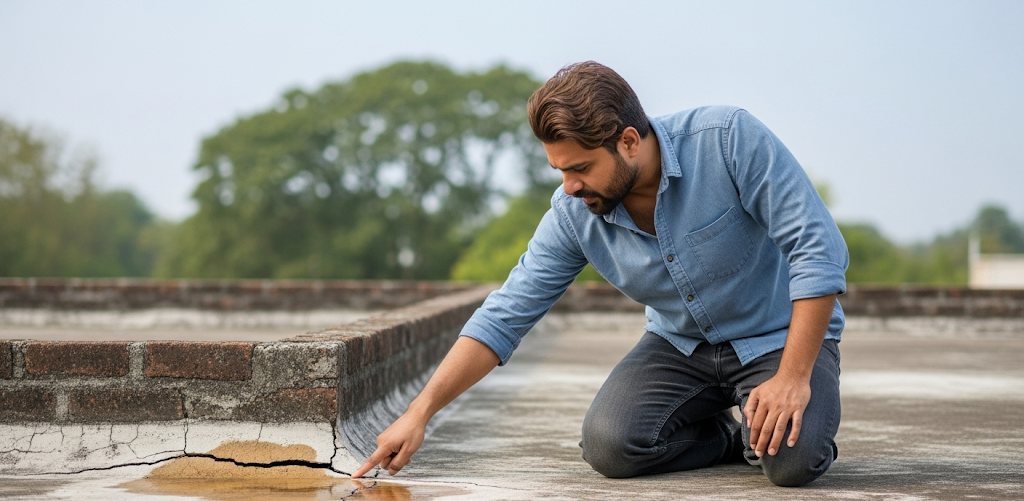
Accurately locating the water entry point is crucial for effective repairs. Examine your roof during dry weather, looking for visible cracks, damaged areas, or water stains. Check joints, edges, and penetrations like vents or chimneys. Inside your home, trace water damage to its highest point to pinpoint the actual leak source.
Step 2: Clean and Prepare Surface

Proper surface preparation ensures maximum adhesion of repair materials. Remove all loose concrete, debris, dirt, and vegetation from the affected area. Use a wire brush, pressure washer, or grinding tools to create a clean, sound surface. Allow the area to dry completely before proceeding with repairs.
Step 3: Apply Crack Filler

Fill cracks and holes with high-quality concrete crack filler or hydraulic cement. These products expand to create waterproof seals. For hairline cracks, use liquid sealants. For wider gaps, apply patching compound first, then sealant. Work the material deep into cracks for maximum effectiveness and durability.
Step 4: Install Waterproof Membrane

Apply a continuous waterproof membrane over the entire affected area or entire roof surface. Clean the surface, apply primer, then install the membrane according to manufacturer instructions. Liquid-applied membranes cure to form seamless, flexible barriers. Ensure proper overlap and adhesion for complete water protection.
Step 5: Seal Penetrations

Pay special attention to roof penetrations like vents, chimneys, and drains. These areas are common leak sources requiring additional reinforcement. Use specialized flashing materials, sealants, and reinforcement fabrics. Create watertight seals around all penetrations to prevent water infiltration through these vulnerable points.
Step 6: Test and Inspect

After completing repairs, test the effectiveness by applying water to the repaired area. Inspect from inside the building for any signs of water infiltration. Conduct thorough visual inspections of the repair work. Schedule regular follow-up inspections to ensure long-term effectiveness and identify any new issues early.
Why Concrete Roofs Leak?
Understanding the root causes of concrete roof leakage is essential for implementing effective long-term solutions. Concrete roofs develop leaks due to a combination of structural, environmental, and maintenance factors that work together over time. The porous nature of concrete makes it naturally susceptible to water absorption, while thermal expansion and contraction create stress that leads to crack formation. Poor construction practices, inadequate drainage systems, and lack of proper waterproofing further compound these issues, creating multiple pathways for water infiltration.
How to Prevent Water Leakage from Concrete Roof?
Prevention is the most cost-effective approach to managing concrete roof leakage, requiring consistent maintenance and proactive measures to address potential issues before they become major problems. A comprehensive prevention strategy involves regular inspections, proper drainage maintenance, protective coatings, and prompt attention to minor damages. By implementing these preventive measures, homeowners can significantly extend their roof’s lifespan, avoid costly emergency repairs, and maintain a dry, comfortable living environment year-round.
- Conduct bi-annual roof inspections in spring and fall
- Keep gutters and drains clear of debris and blockages
- Apply protective roof coatings every 3-5 years
- Repair minor cracks and damage immediately upon discovery
- Ensure proper roof slope for adequate water drainage
- Install and maintain high-quality waterproof membranes
- Seal all roof penetrations with appropriate materials
- Monitor and maintain expansion joints regularly
- Remove standing water from flat roof surfaces
- Trim overhanging tree branches to prevent damage
- Install proper insulation to prevent thermal shock
- Use UV-resistant materials to prevent degradation
- Maintain proper ventilation to reduce moisture buildup
- Schedule professional inspections every 2-3 years
- Keep detailed maintenance records for warranty purposes
How to Stop Water Leakage from Concrete Roof with Techno Leak Detection?
Advanced technology revolutionizes concrete roof leak detection and repair, offering precision diagnostics and cutting-edge waterproofing solutions for superior long-term protection.
1. Water Leakage Detection by Non-Invasive Method
Non-invasive leak detection employs infrared thermography, electronic moisture detection, and acoustic sensors to precisely locate hidden leaks without structural damage or costly exploratory work.
2. Waterproofing
Modern waterproofing technology utilizes advanced polymer membranes, self-healing compounds, and smart coatings that provide superior protection while adapting to environmental conditions and structural movement.
How to Stop Water Leakage from Concrete Roof? – FAQ’s
How to stop a roof leak permanently? Apply a comprehensive waterproof membrane system with proper surface preparation and regular maintenance.
How to fix a concrete roof from leaking? Identify the source, clean the area, apply crack filler, and install a waterproof membrane.
How to stop a leak in a concrete ceiling? Locate the leak source above, repair cracks, and apply waterproof coating from the exterior.
What is the fastest way to fix a leaking roof? Use quick-setting hydraulic cement or emergency roof sealant for temporary repairs.
Can we use Dr. Fixit for roof leakage? Yes, Dr. Fixit products are effective for concrete roof waterproofing and leak repairs.
How to stop slab leakage? Clean the surface, apply concrete sealant, and install a waterproof membrane system.
How to stop water seeping through a concrete roof? Apply penetrating concrete sealers followed by a surface waterproof membrane.
Which liquid helps to stop the leaks in a cement roof? Liquid polyurethane, acrylic, or silicone-based waterproof coatings are most effective.
How to make concrete roof leak proof? Apply primer, install waterproof membrane, seal penetrations, and maintain proper drainage.
What is the cheapest way to fix a slab leak? Use concrete crack filler and apply a liquid waterproof coating over the affected area.
How to protect a concrete roof from rain? Install a complete waterproofing system with membranes, sealants, and proper drainage.
How to fix leaks in concrete? Clean the crack, apply hydraulic cement or polyurethane sealant, and cover with waterproof membrane.

