



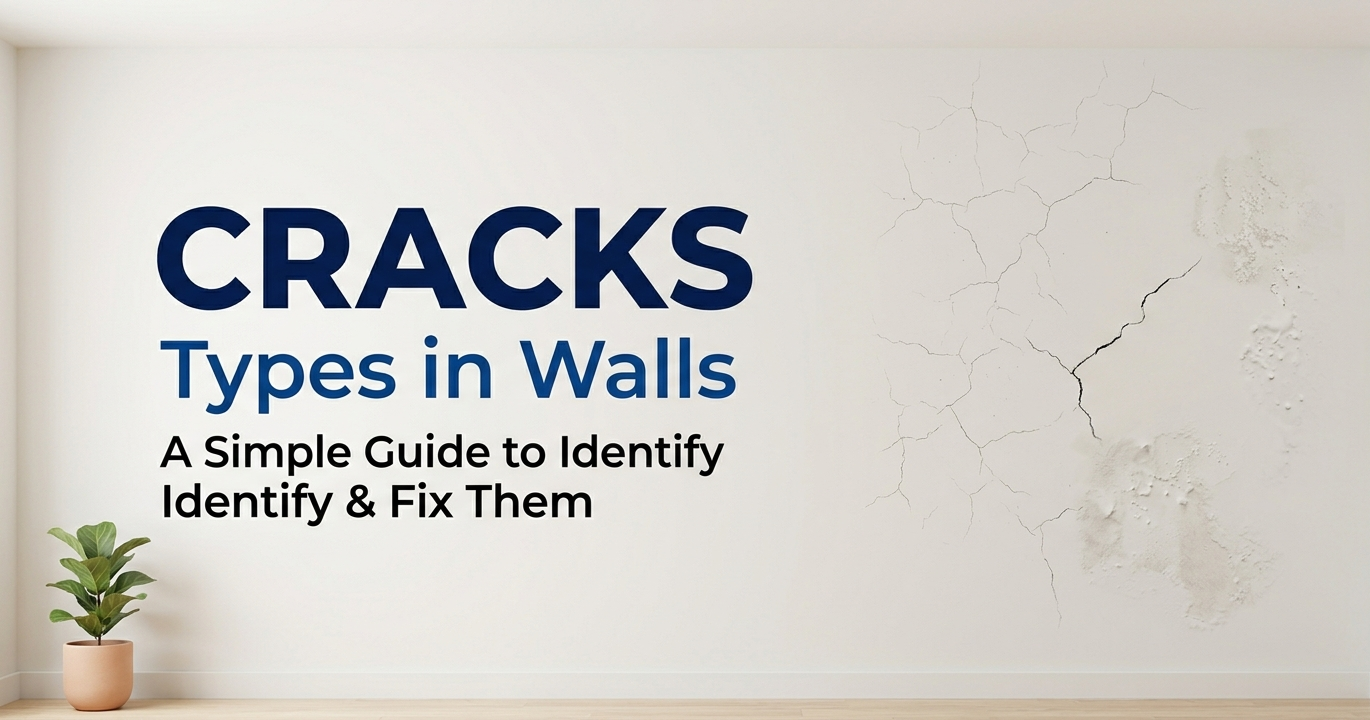
What are the 10 common types of cracks in Walls? The 10 common types of wall cracks are hairline cracks, vertical cracks, horizontal cracks, diagonal cracks, stair-step cracks, cracks around doors and windows, map or spider web cracks, cracks with damp patches, wide or deep cracks, and corner cracks – each caused by different reasons ranging from normal settlement to serious water seepage or foundation movement.
Table of Contents
Almost every home develops cracks in the walls at some point. Some appear right after construction. Others show up years later. Most people either panic or ignore them completely – and both reactions can be costly. The truth is, wall cracks come in different shapes, sizes, and directions, and each type tells a different story about what is happening inside your home.
10 Common Types of Cracks in Walls.
Here are the 10 Common Types of Cracks in Walls, what causes them, and when you should be worried.
1. Hairline Cracks in walls
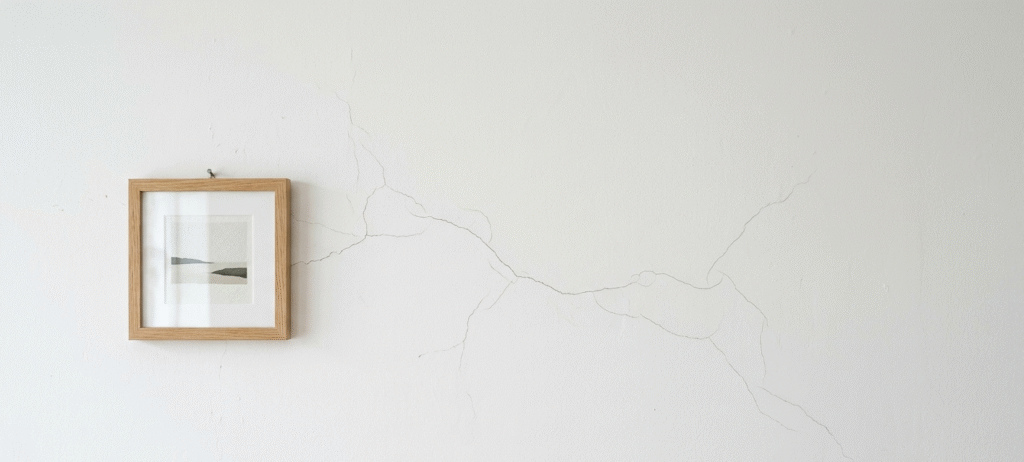
These are very thin, surface-level cracks that look like fine lines on your wall. They are extremely common in newly built homes and usually appear within the first year as the building settles. Hairline cracks are mostly cosmetic and can be fixed easily with wall putty or filler. However, if they keep growing in size over time, get them checked.
2. Vertical cracks in walls

Vertical cracks run straight up and down the wall. In most cases, they are caused by the natural settling of the building or minor shrinkage in the plaster. They are generally not structural, but if the crack is wide or keeps expanding, it could point to foundation movement that needs professional attention.
3. Horizontal Cracks in walls
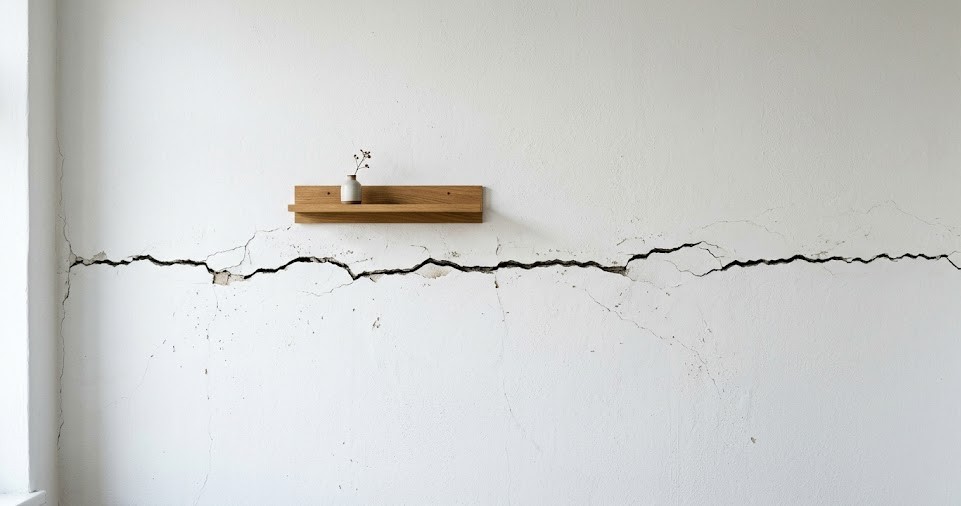
Horizontal cracks are one of the more serious types. They usually appear on exterior or basement walls and are often caused by soil pressure pushing against the wall from outside. This type of crack can affect the structural strength of the wall and should be inspected by an expert without delay.
4. Diagonal Cracks in walls
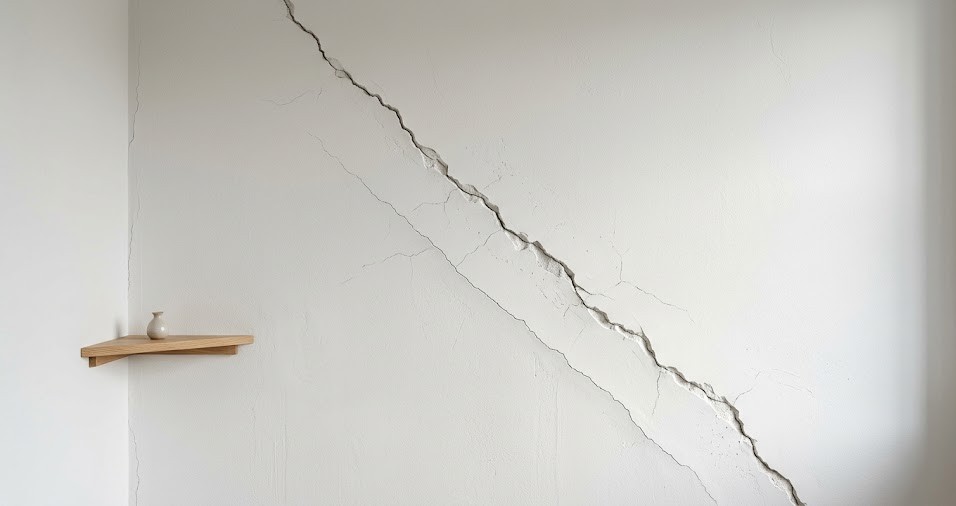
Diagonal cracks run at an angle, usually between 30 and 75 degrees. They are often caused by uneven settlement of the foundation, where one part of the building sinks slightly more than another. A single diagonal crack may not be urgent, but multiple diagonal cracks appearing together is a warning sign of foundation issues.
5. Stair-Step Cracks in walls
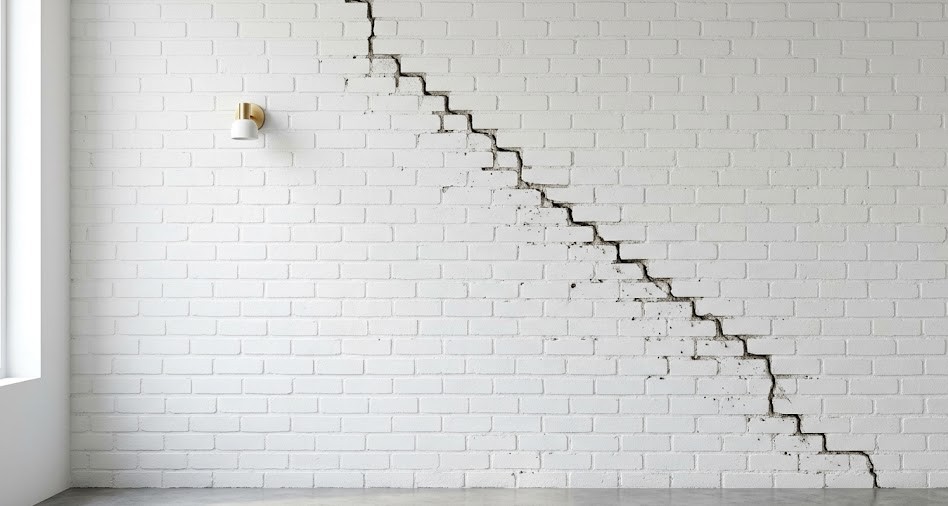
These cracks follow the joints between bricks or blocks in a stair-step pattern. They are very common in brick walls and are usually caused by differential settlement, meaning different parts of the wall are moving at different rates. Stair-step cracks in load-bearing walls need prompt professional evaluation.
6. Cracks Around Doors and Windows
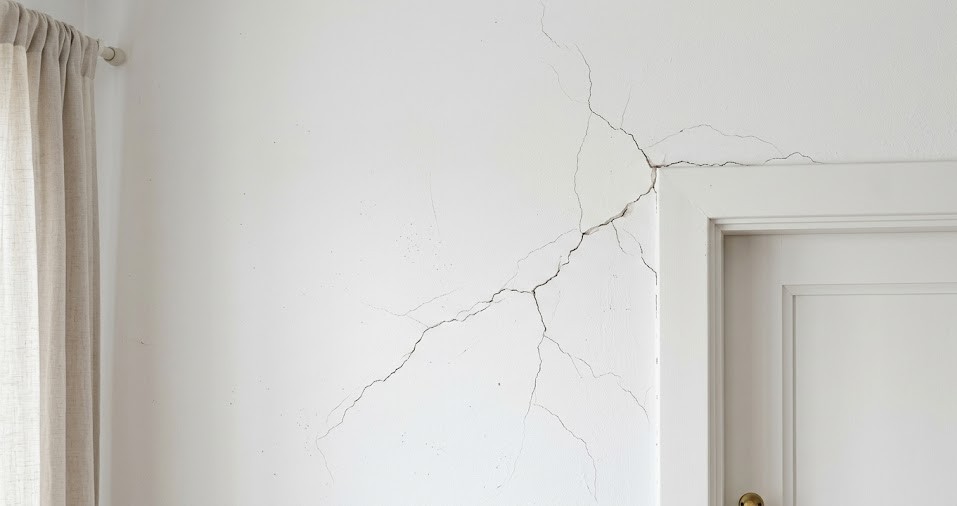
Cracks that appear at the corners of door frames and window frames are very common. They are usually caused by the natural expansion and contraction of the building material due to temperature changes. Most are minor, but large cracks around frames can also indicate foundation movement or water seepage weakening the surrounding wall.
7. Map or Spider Web Cracks in walls
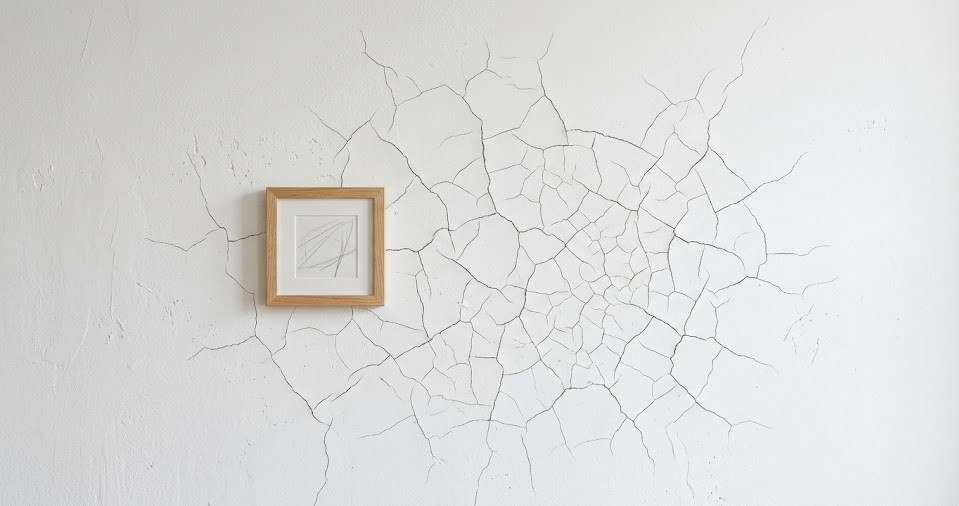
These cracks spread out in multiple directions like a spider web or a cracked eggshell. They are usually caused by poor quality plaster, a thick coat of plaster applied too quickly, or low-quality paint. They are mostly surface-level and not structural, but they do indicate poor construction quality.
8. Cracks with Damp Patches
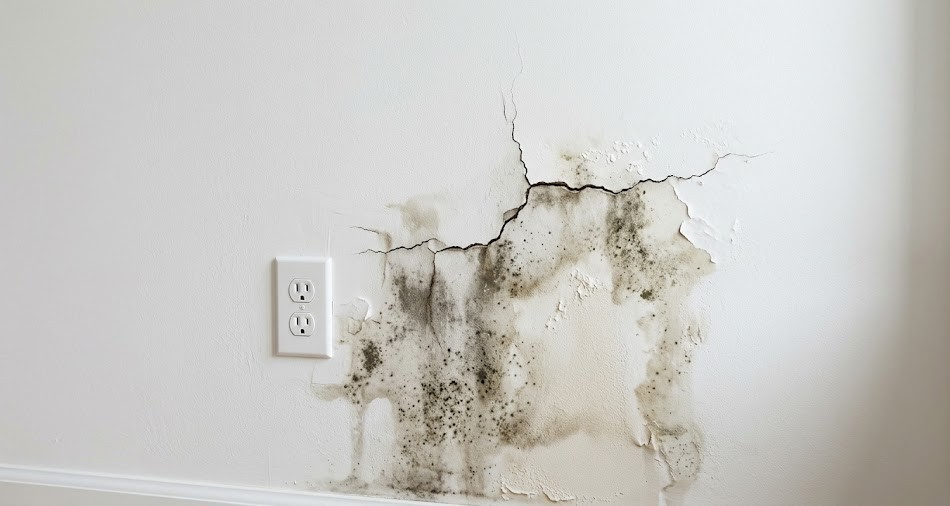
If you see a crack accompanied by a damp patch, water stain, or paint peeling around it, this is a serious sign. It means water is entering through that crack, either from rain, a leaking pipe, or terrace seepage. This type of crack needs immediate attention because ongoing moisture leads to mold growth, weakened plaster, and long-term structural damage.
Also Read on How to Get Rid Of Mold.
9. Wide or Deep Cracks in walls
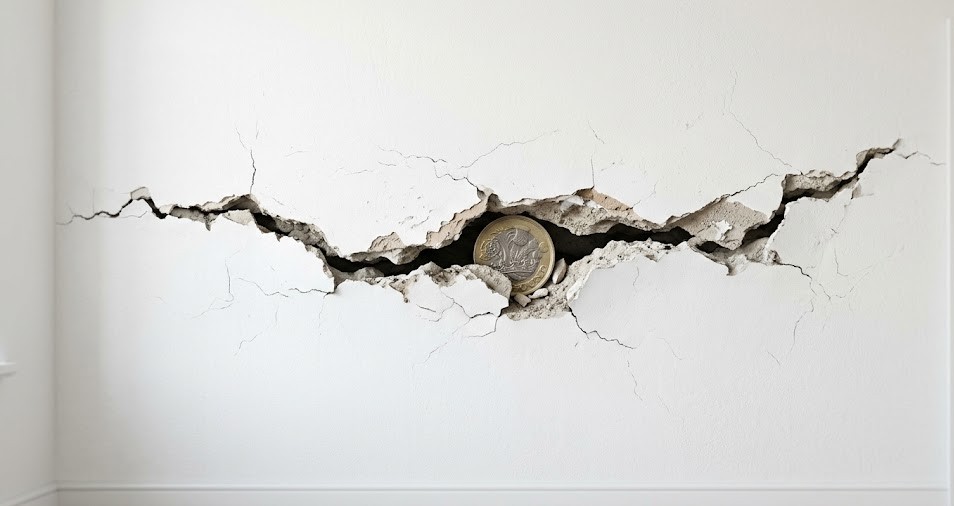
Any crack wider than 5mm or deep enough that you can insert a coin into it is considered serious. Wide cracks usually point to significant foundation movement, heavy structural load, or long-term water damage weakening the wall from inside. Do not attempt to fill these yourself. A structural engineer should inspect them first.
10. Cracks in Corners
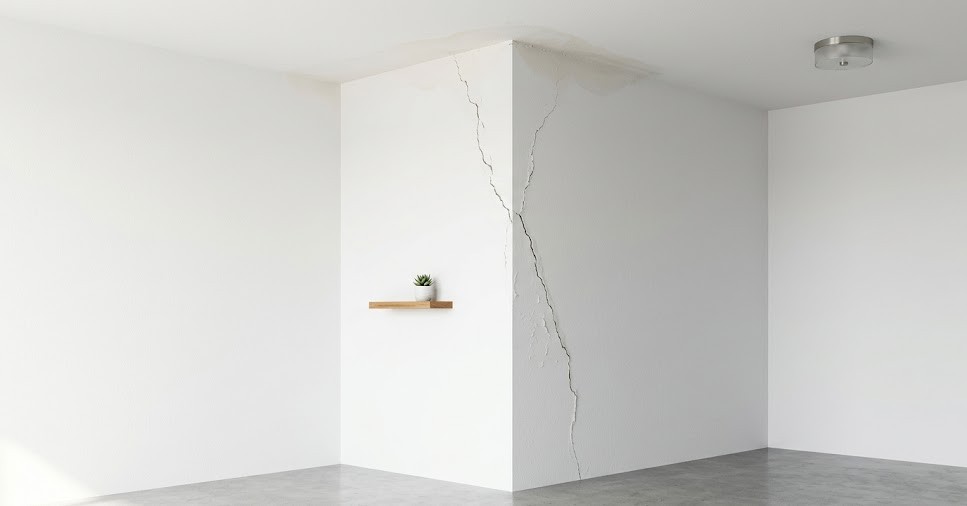
Cracks that appear at the corner where two walls meet, or where a wall meets the ceiling, are usually caused by the building settling over time or by water seepage running down from above. Corner cracks near the ceiling often point to roof or terrace leakage, while floor-level corner cracks can suggest moisture rising from the ground.
When Should You Worry About a Wall Crack?
Not every crack needs emergency action, but you should call a professional if:
- The crack is wider than 5mm or is growing over time
- The crack is horizontal or diagonal on a load-bearing wall
- There is dampness, staining, or mold around the crack
- Doors or windows near the crack have started sticking or not closing properly
The Solution to Hidden Danger Behind Wall Cracks – Zero Leakage
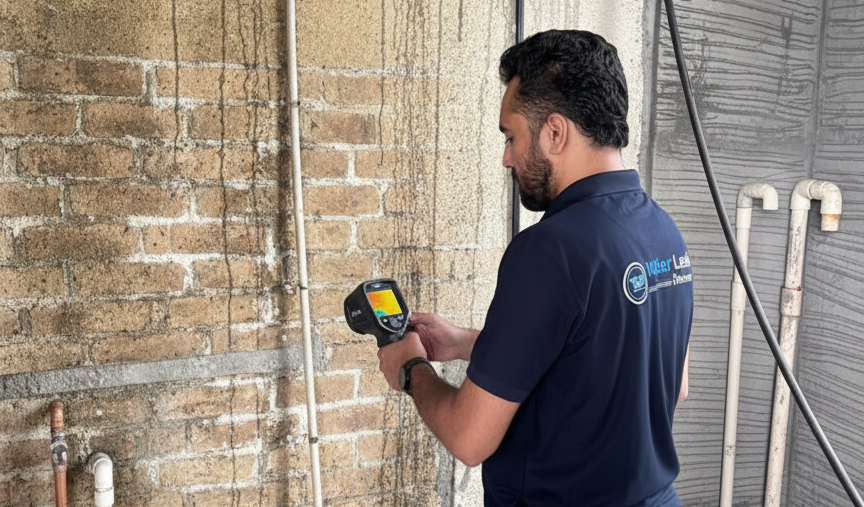
Many wall cracks are directly connected to water seepage inside the wall. The water weakens the plaster and structure from inside, and the crack is simply the visible result on the surface. Filling the crack without finding the water source is a temporary fix at best.
At Zero Leakage, we use thermal imaging and moisture detection technology to find exactly where water is entering your walls, without breaking any tiles or plaster. If you have cracks with damp patches, recurring cracks that keep opening up after repair, or walls that stay wet even in dry weather, the problem is almost certainly a hidden leak.
Do not just fill the crack. Find the cause. Book a water Leak inspection with Zero Leakage today.
Conclusion – 10 Common Types of Cracks in Wall
Wall cracks are not all equal. Some are harmless signs of normal settling, while others are early warnings of serious structural or water-related problems. The key is to know what type of crack you are looking at, watch whether it is growing, and check for any signs of dampness around it. When in doubt, always get it checked by a professional – because a small crack ignored today can become a very expensive problem tomorrow.
10 Common Types of Cracks in Wall – FAQ’s
Are wall cracks normal in a new home?
Yes, hairline and vertical cracks are very common in new homes as the building naturally settles within the first year.
Which type of wall crack is the most serious?
Horizontal cracks are the most serious as they indicate structural stress or soil pressure pushing against the wall.
How do I know if a wall crack is structural?
If the crack is wider than 5mm, growing over time, or accompanied by dampness, it is likely structural and needs professional inspection.
Why do cracks appear around doors and windows?
They are usually caused by temperature-related expansion of building materials or water seepage weakening the surrounding wall.
Can water seepage cause wall cracks?
Yes, water seepage weakens the wall from inside and eventually causes cracks, damp patches, and peeling paint on the surface.
Should I fill wall cracks myself?
Small hairline cracks can be filled at home, but wide, deep, or damp cracks must be inspected by a professional first.
Why do cracks keep coming back after repair?
Because the root cause, usually hidden water seepage or foundation movement, has not been fixed before the repair was done.
What do stair-step cracks in brick walls mean?
They indicate uneven settlement where different sections of the wall or foundation are moving at different rates.
Are corner cracks in walls dangerous?
Corner cracks near the ceiling usually point to roof leakage and near the floor indicate rising dampness, both need attention.
When should I call a professional for wall cracks?
Call a professional if the crack is wider than 5mm, growing, horizontal, or surrounded by dampness, mold, or peeling paint.


